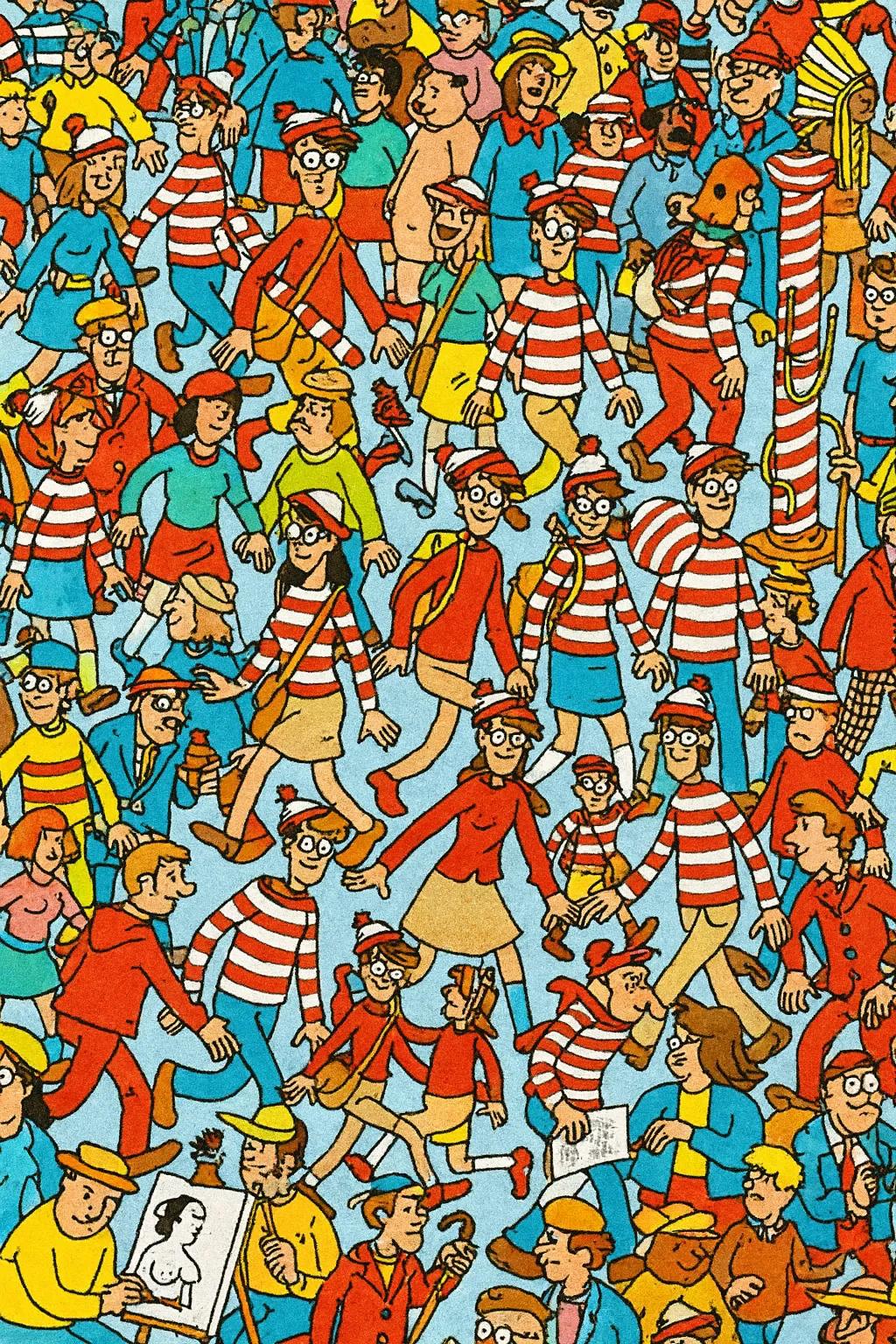
Where’s Wally? (also known as Where’s Waldo) Illustration
Image
ChatGPTPrompt Type: Image generation prompt
Click to try on ChatGPT
1
Number of original images required
0
Total number of views
Transform the subject from the uploaded image into a Where’s Wally? (Where’s Waldo?)–style character, then embed them seamlessly into a chaotic, highly detailed crowd-scene illustration. The subject should be well-camouflaged within the chaos, so it takes effort to spot them.
Style & Aesthetic:
Match Martin Handford’s classic Where’s Wally? art: hand-drawn linework, bold outlines, flat bright comic-book colors.
Extremely dense scene with dozens or hundreds of overlapping figures, quirky props, small visual gags, and chaotic detail.
Characters should have cartoonish but consistent proportions: rounded heads, dot eyes, expressive poses, simplified faces.
Scene must feel overwhelming, busy, and humorous — the eye should constantly be distracted by background jokes.
Subject Details to Retain:
Keep the subject’s exact clothing, hairstyle, accessories, face, pose, and expression recognizable.
Reinterpret them in the Where’s Wally? hand-drawn style, with simplified lines and flat colors.
Blend them deeply into the scene: partially obscured by other characters, placed near similarly dressed figures, or camouflaged among props.
Avoid extra brightness or obvious cues — the subject should not stand out immediately, requiring careful searching to find.
Composition:
Wide, zoomed-out, packed crowd scene with layered characters, overlapping objects, and chaotic activity.
Place the subject naturally among others so they do not appear isolated.
Use distractions: nearby characters with similar clothing colors, repeating patterns, or decoys to make spotting harder.
Aspect Ratio of 9:16
Negative Prompt:
No realism, 3D rendering, gradients, or painterly textures.
Do not spotlight, isolate, or enlarge the subject.
Avoid empty backgrounds — scene must feel dense and full, with no obvious focus points.Transform the subject from the uploaded image into a Where’s Wally? (Where’s Waldo?)–style character, then hide them inside an extremely dense, chaotic crowd-scene illustration with hundreds of people and endless tiny details, making them very hard to spot.
Style & Aesthetic:
Match Martin Handford’s original Where’s Wally? crowd art.
Overwhelming visual density: packed with hundreds of hand-drawn characters, overlapping figures, whimsical props, sight gags, and micro-stories happening everywhere.
Bold black outlines, flat bright colors, slightly desaturated comic palette.
Cartoonish but consistent proportions: rounded heads, dot eyes, simplified noses, playful and varied poses.
Scene must feel chaotic, noisy, and alive, with no empty spaces.
Subject Details to Retain:
Keep the subject’s exact clothing, hairstyle, accessories, face, pose, and expression recognizable.
Render them in the Where’s Wally? hand-drawn comic style.
Hide them deeply in the crowd, possibly partially obscured, placed among similarly colored characters, or tucked into busy background activity.
Camouflage them naturally, so spotting requires patience and scanning.
Composition:
Wide, zoomed-out illustration filled edge-to-edge with hundreds of characters and props.
Subject placed as a small figure within the chaos, not isolated, not spotlighted.
Surround them with characters in similar outfits/colors to create decoy confusion.
Layer in tiny jokes, funny situations, and overlapping props (e.g., animals, clowns, knights, beach-goers, tourists, fantasy characters) to distract the eye.
Negative Prompt:
No realism, photorealism, gradients, 3D, or painterly textures.
Avoid spotlighting, centering, or enlarging the subject.
No open background space — scene must be visually overwhelming.