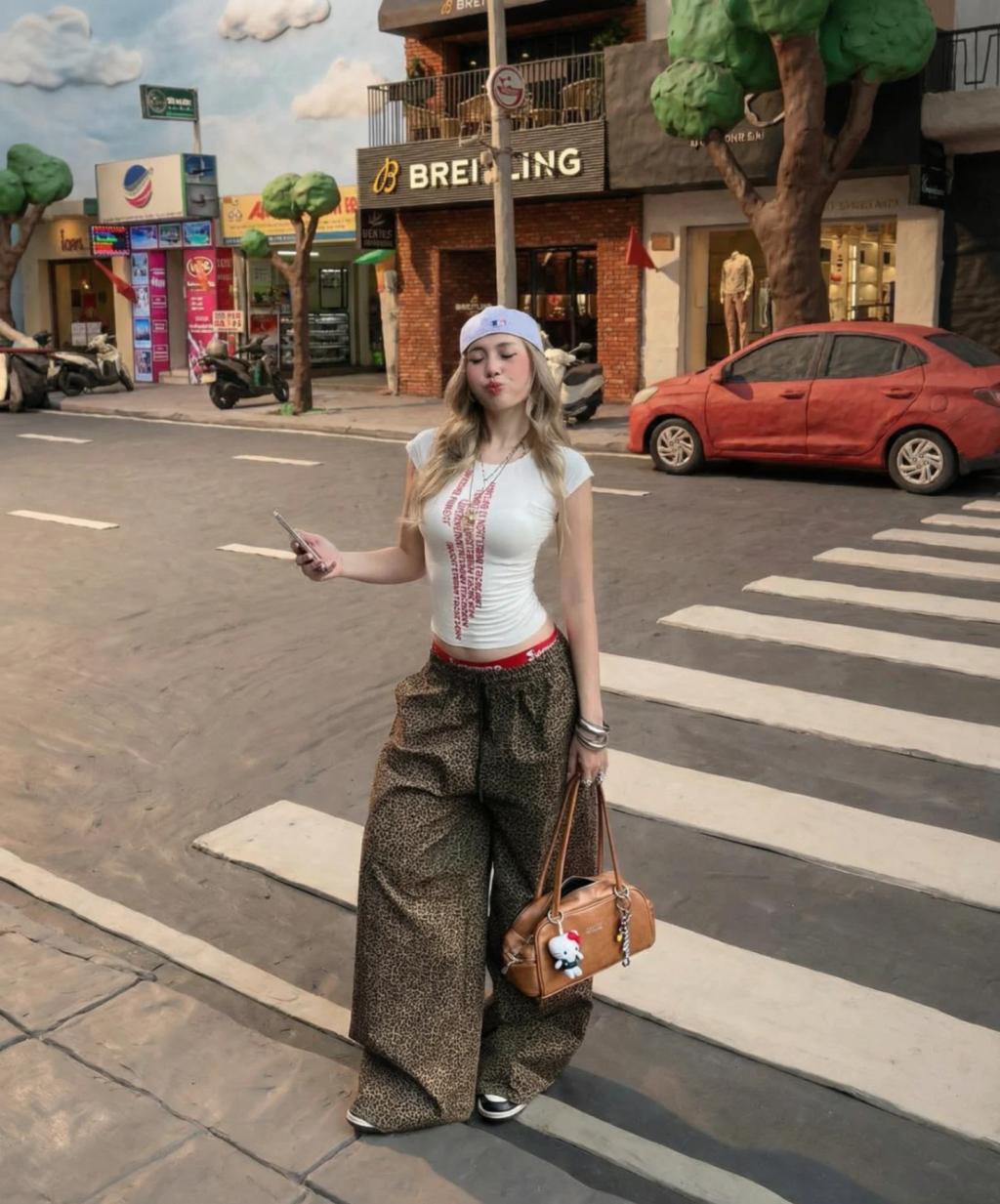
Clay / Stop-Motion Surroundings
Image
GeminiPrompt Type: Image generation prompt
Click to try on Gemini
1
Number of original images required
330
Total number of views
Use the uploaded image as the only source of identity for the main subject.
Core Transformation
Transform everything except the main subject into a handcrafted clay stop-motion world, as if the environment were built for a Laika or Aardman-style stop-motion film.
Buildings, streets, sidewalks, floors, walls, furniture, vehicles, trees, props, background objects, and scenery
→ All rendered as sculpted clay models
Sky, clouds, lighting ambience
→ Stylized clay sky with soft, imperfect textures
Subject Preservation (STRICT)
The main subject must remain 100% realistic and unchanged
Preserve:
- Face, skin texture, hair, clothing, accessories
- Body proportions, pose, expression
- Photographic realism and sharpness
No stylization applied to the subject
Clay / Stop-Motion Style Rules
Clay textures must look:
- Hand-molded
- Slightly uneven
- Soft, tactile, and imperfect
Visible:
- Finger smudges
- Tool marks
- Subtle seams where clay pieces meet
Shapes:
- Rounded edges
- Chunky forms
- Slight asymmetry (not perfectly straight)
Lighting & Rendering
Stop-motion studio lighting:
- Soft directional light
- Gentle shadows
- Slight falloff and depth
Matte clay surfaces
No gloss unless appropriate (e.g., wet clay look on roads)
Visual Contrast (IMPORTANT)
Strong contrast between:
- Realistic subject
- Clay-crafted environment
The subject should clearly feel “placed inside” a clay world
Camera & Composition
Match the original camera angle and framing from the uploaded image
Maintain natural perspective and depth
Ensure the subject remains the visual focal point
Negative Prompt (STRICT)
No stylization on the subject
No cartoon or clay texture on skin, hair, or clothes
No plastic, rubber, or 3D CGI look
No voxel, LEGO, pixel, anime, or illustration styles
No smooth or digitally perfect surfaces
Output Quality
High detail
Cinematic stop-motion realism
Believable scale and spatial consistency